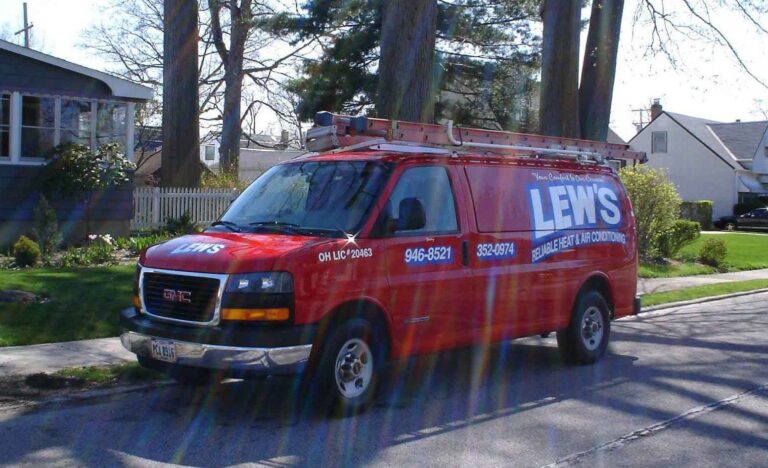
Why the Quality of Your AC Installation in Perry, OH Matters
The performance of a central air conditioning system is decided long before the first hot day of summer arrives. It is decided at the moment of installation. A high-efficiency unit that is oversized, undersized, or connected to leaky ductwork will never deliver the comfort or the energy savings that its rating promises. This is the reason we treat every AC installation in Perry, OH as a technical project rather than a simple swap of old equipment for new.
When a system is installed correctly, you get quiet operation, even temperatures from room to room, controlled humidity, and utility bills that reflect the efficiency you paid for. When it is installed poorly, you get short cycling, hot spots, premature compressor wear, and repeated service calls. At Lew's Reliable Heat & A/C, we have watched both outcomes play out across Lake and Geauga counties for decades, and our approach is built to make sure your new equipment lands firmly in the first category.
Questions Perry Homeowners Ask Before They Install
Most conversations about a new air conditioner begin with a handful of practical questions. Understanding the answers early helps you make a confident decision instead of a rushed one when your old system finally quits during a heat wave.
The most common questions we hear include the following, and each one deserves a clear explanation before any equipment is ordered:
- Should I repair or replace: If your existing unit is more than 12 to 15 years old, uses the older R-22 refrigerant, or needs a repair that costs a significant portion of a new system, replacement is usually the wiser long-term choice.
- What size unit do I need: Size is measured in tons and BTUs, and it must match the heat load of your specific home rather than a rule of thumb based only on square footage.
- How much efficiency do I actually need: Efficiency is rated in SEER2, and while higher numbers reduce operating costs, the right target depends on how many hours the system runs each season and how long you plan to stay in the home.
- Will my existing ductwork work with a new system: Undersized or leaky ducts can strangle even the best equipment, so the ducts deserve inspection before installation begins.
- How disruptive is the installation: A standard changeout is typically completed in a single day with minimal interruption to your household.
We answer these questions directly during the initial visit. Rather than pushing the largest or most expensive unit, we recommend the system that fits your home, your budget, and the way you actually live. That approach reflects the words of our owner, Lisa Joles: “Our goal is to provide exceptional service, reasonable rates, and lasting comfort to all of our customers.”
How We Size and Select the Right System
Correct sizing is the single most important technical decision in any AC installation. An oversized unit cools the air quickly but shuts off before it removes enough moisture, leaving your home cold and clammy while the compressor cycles on and off in a way that shortens its life. An undersized unit runs constantly and still struggles to keep up on the hottest afternoons. Neither extreme delivers comfort or efficiency.
To avoid guesswork, we perform a load calculation that accounts for the real characteristics of your Perry home. That calculation considers square footage, ceiling height, window count and orientation, insulation levels, air infiltration, and the local climate. Northeast Ohio summers bring both heat and humidity, so a system that manages latent load, meaning moisture, is just as important as one that manages temperature. Once we know the true cooling load, we select a unit with matching capacity and pair the outdoor condenser with a properly matched indoor coil so the system operates as the manufacturer intended.
Refrigerant type also factors into system selection. New equipment uses modern, environmentally responsible refrigerants that meet current federal standards, and matching the coil, line set, and metering device to that refrigerant is essential for reliable operation. Our North American Technician Excellence (NATE) certified technicians handle these details as a matter of routine, because the small technical choices made during selection are what separate a system that lasts from one that fails early.
Understanding What a Proper Installation Includes
A professional AC installation is far more than setting a condenser on a pad and connecting a few wires. Each step affects how the finished system performs and how long it lasts. When our team installs a system, the process follows a disciplined sequence designed to protect your investment.
The core stages of our installation work include:
- Old equipment removal: We safely recover any remaining refrigerant, disconnect the old unit, and remove it without leaving a mess behind.
- Site and pad preparation: The outdoor unit sits on a level, stable base that keeps it out of standing water and away from debris that can restrict airflow.
- Line set and coil connection: Refrigerant lines are routed cleanly, brazed properly, and matched to the indoor evaporator coil for correct refrigerant flow.
- Evacuation and vacuum: Before charging, we pull a deep vacuum on the lines to remove air and moisture, which would otherwise cause corrosion and poor performance.
- Precise refrigerant charging: The system is charged to the manufacturer specification and verified by measuring pressures and temperatures, not by guessing.
- Electrical and control wiring: Disconnects, whips, and thermostat connections are made to code and tested for safe, reliable operation.
- Startup and verification: We run the system, confirm airflow, check the temperature drop across the coil, and make sure the equipment cycles correctly before we leave.
This methodical approach reflects our long-standing motto: fast repairs… fixed right. The same commitment to doing the job correctly the first time applies to every installation we complete.
Technical Specifications and What They Mean for You
Homeowners often feel overwhelmed by the numbers printed on equipment labels. A short explanation removes the mystery and helps you understand exactly what you are buying. SEER2 measures seasonal cooling efficiency, and a higher rating means lower operating costs over the life of the unit. Tonnage describes cooling capacity, where one ton equals 12,000 BTUs of heat removal per hour. The temperature drop across the indoor coil, typically in the range of 18 to 22 degrees, confirms the system is moving and conditioning air correctly.
Proper airflow, usually around 400 cubic feet per minute per ton, ties all of these specifications together. Even a top-rated compressor cannot deliver its rated efficiency if the ductwork restricts airflow, which is why we evaluate the duct system as part of the installation and recommend corrections when they are needed. When these specifications work in harmony, you feel the difference as steady comfort and predictable utility bills.
Serving Perry and the Surrounding Communities
Lew's Reliable Heat & A/C is a second-generation, family-owned heating and air conditioning sales and service company. Established by Lew Schwentner in 1970, we have been providing dependable heating and air conditioning service to residents of Lake and Geauga for more than 49 years. Along with Perry, we install and service systems throughout Fairport Harbor, Painesville, Mentor, and Concord Township, OH, and the trust we have earned comes from decades of honest, experienced work.
When you call, you will be greeted by a friendly voice who will schedule one of our highly trained technicians, several of whom have been part of our team for more than 20 years. From the first load calculation to the final startup test, our focus stays on exceptional service, reasonable rates, and lasting comfort. When it is time for a new air conditioner in Perry, OH, we are ready to install a system that keeps your home cool for many summers to come.